



The Challenge:
Meeting New Coal Blending Requirements Efficiently
New emission laws required B&N Coal to blend low-sulfur coal at its plant, creating the need for an efficient way to unload incoming coal barges into hoppers feeding the power plant. The company initially considered upgrading its existing cable cranes before evaluating new cable cranes as an alternative. B&N Coal needed a solution that could meet its productivity requirements while reliably handling the changing water levels of the Ohio River. Ease of operation was also important, particularly because not every operator had previous crane experience.
“Two of our operators had never run a crane before. Also, after only two days of training, the crane operators were offloading coal at over 500 tons per hour. It’s doing a super job.”
Carl Baker – President, B&N Coal
“Initially we researched upgrading older cable cranes we own. Then we looked at new cable cranes. But, once we priced out the E-Crane, there wasn’t any choice – this just made the most sense.”
Carl Baker – President, B&N Coal
The Solution:
Reliable Barge Unloading Through Balanced Design
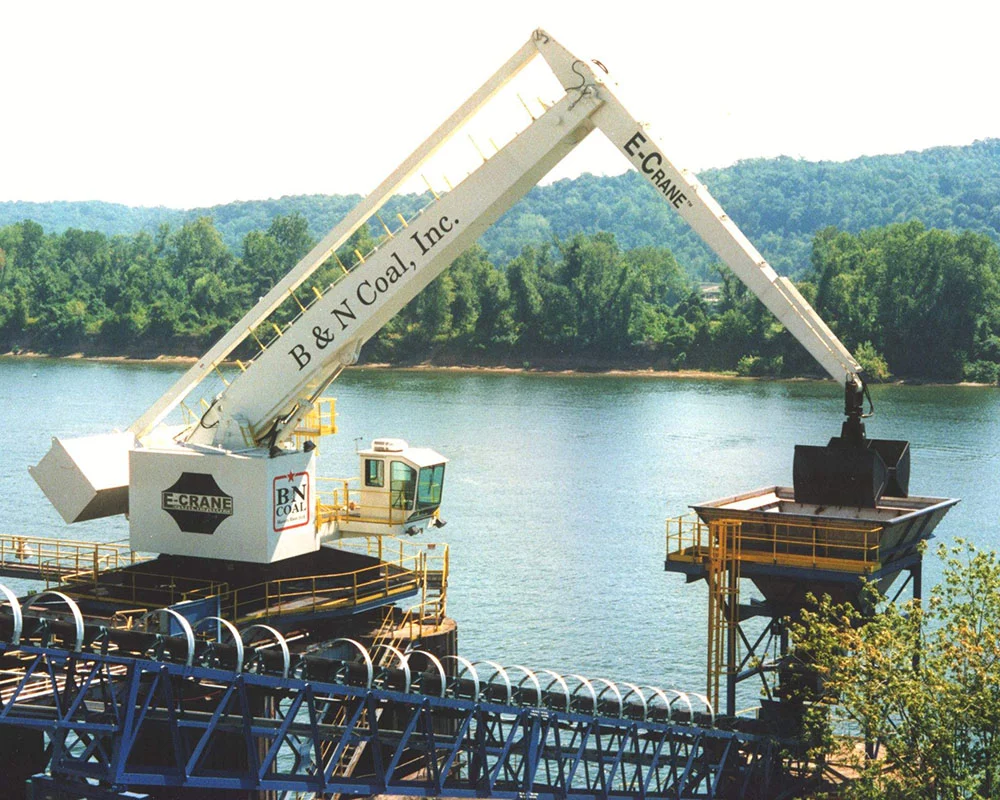
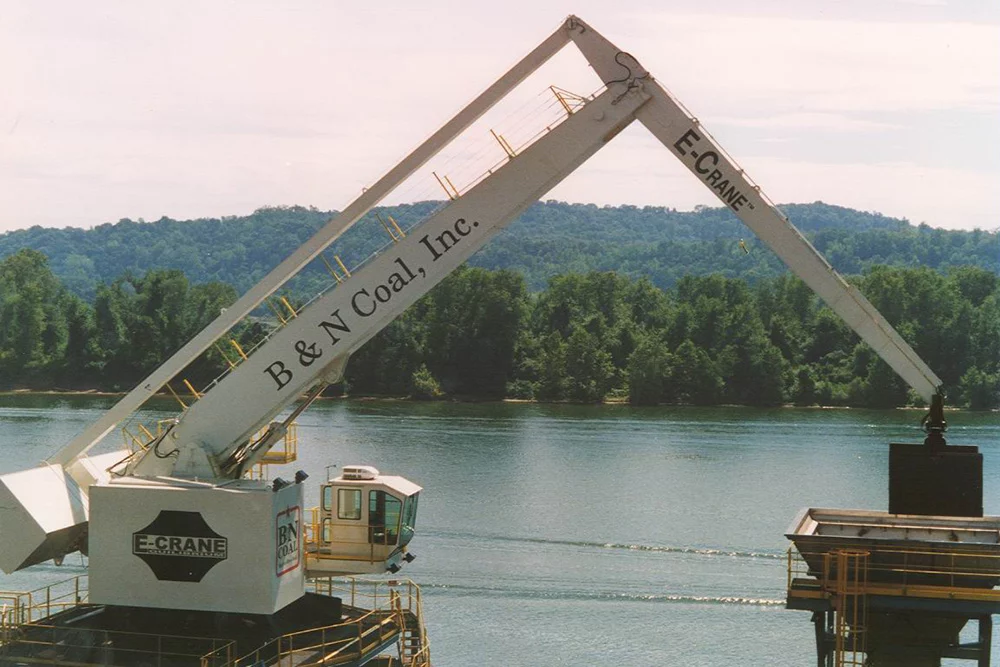
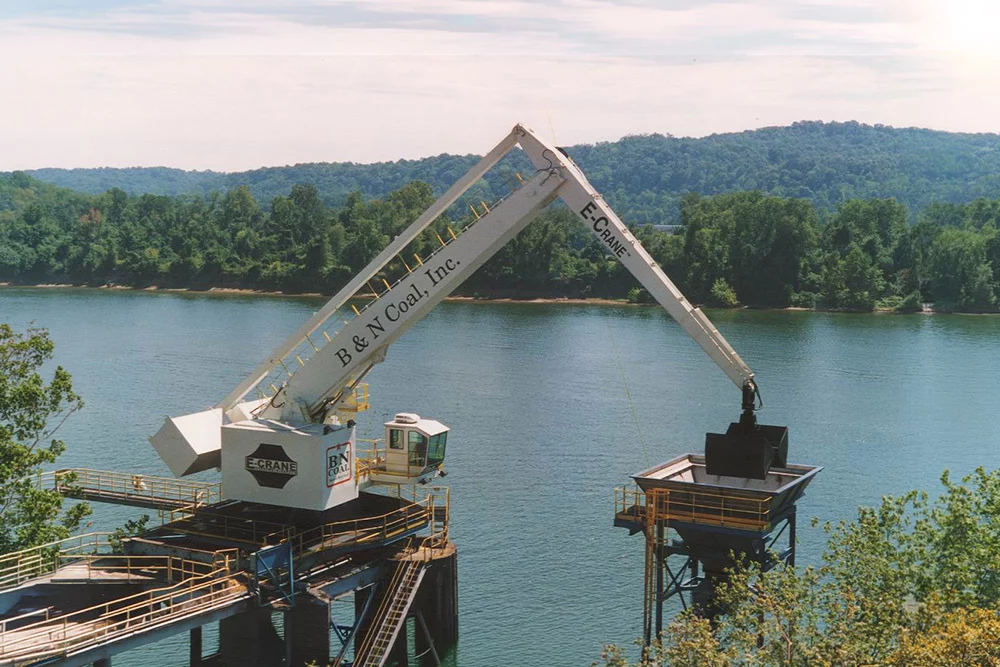
After comparing several alternatives, B&N Coal selected an E-Crane as the most practical solution for its barge unloading operation. The crane’s balanced design and fixed installation provide the combination of reach, productivity, and ease of operation required to efficiently transfer coal from barges into the plant’s receiving hoppers.
The solution includes:
BUSINESS OUTCOME
