


Why balanced design is better for your business
E-Crane Technology & Innovation
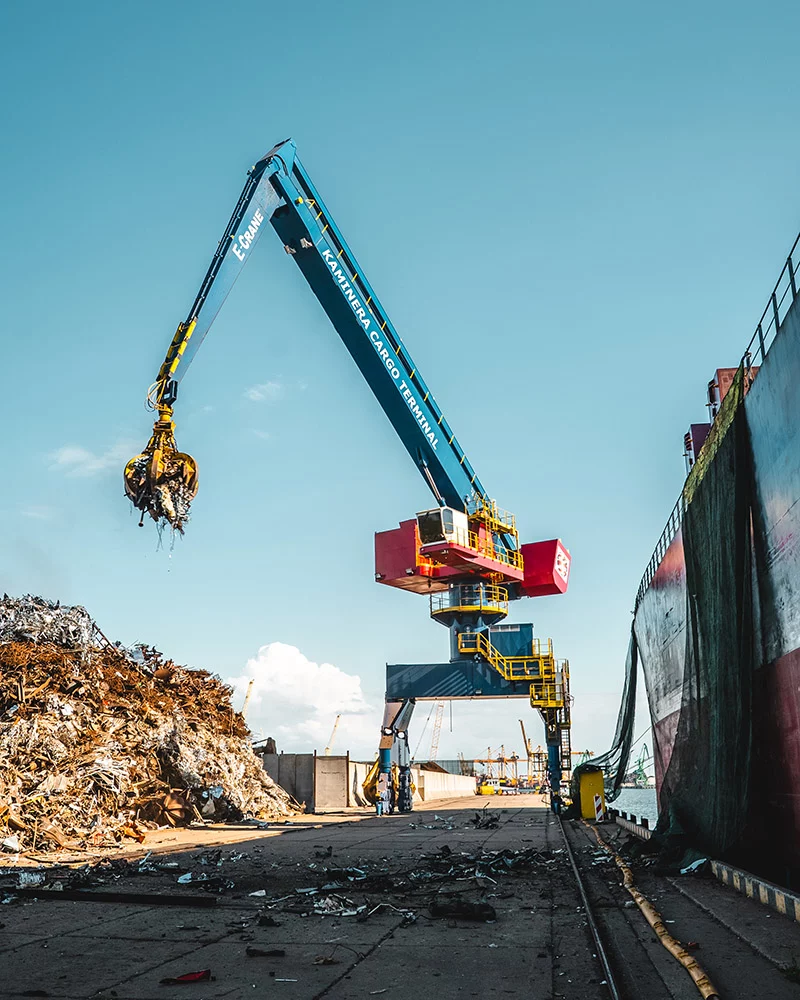
E-Crane builds equilibrium cranes around one core principle: true balance across the full working range. A mechanically linked moving counterweight continuously compensates the crane structure and part of the payload, enabling high production handling with lower power demand.
Balance is one of the key factors for any crane in the industry. Without the right balance, stability and controllability drop, especially at reach.

How does it work?
Only E-Crane finds true balance
The E-Crane equilibrium system is designed as a fail-safe, mechanically linked balance concept. The link between the stick and the moving counterweight forms a 4-bar mechanism, which continuously balances the steel structure together with a defined part of the operational load. As lifting radius changes, the load moment is automatically equalized by the moving counterweight.
The physics
The physics behind equilibrium
In many crane concepts, the counterweight is fixed. That means the system is only perfectly balanced at a specific radius. As soon as radius changes, balance is disturbed. In an equilibrium design with a moving counterweight, the counterweight position changes with the geometry, keeping the moment relationship under control as the working radius varies.
Equilibrium can be explained with a simple moment balance:
F1 × d1 = F2 × d2
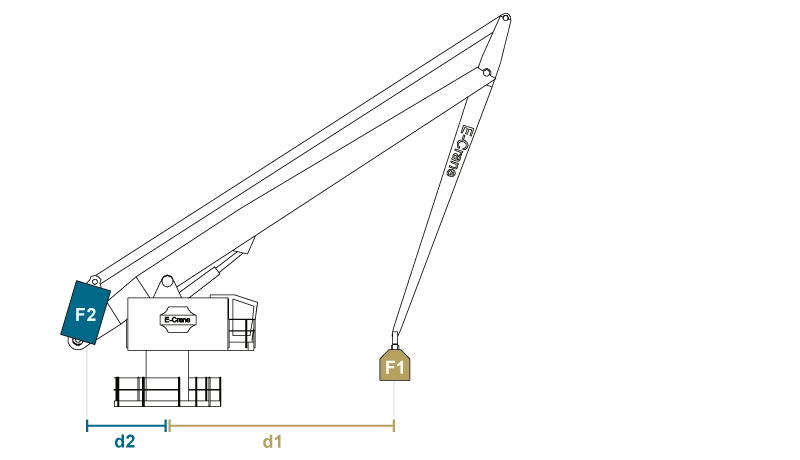

F1: the load applied at the end of the stick
d1: the distance from the load to the pivot point
F2: the load of the counterweight
d2: the distance from the counterweight to the pivot point
The problem with conventional cranes
To be balanced at any given position, the counterweight has to continuously compensate for the load. When the load increases, you either need a heavier counterweight, or you need to place the counterweight further away from the centre of rotation to create the same counterbalancing effect.


A simple example makes this clear. A 1-ton load at a 20-foot radius creates a forward moment of 20. To counterbalance that, you could use a 4-ton counterweight placed 5 feet behind the pivot (20 × 1 = 4 × 5), which creates the same rearward moment.
In practice, adding more counterweight is often not practical and sometimes not recommended. That is why a fixed counterweight crane is only truly balanced at one specific radius. As soon as the working radius changes, the balance changes with it.
Operator comfort
Operator Comfort
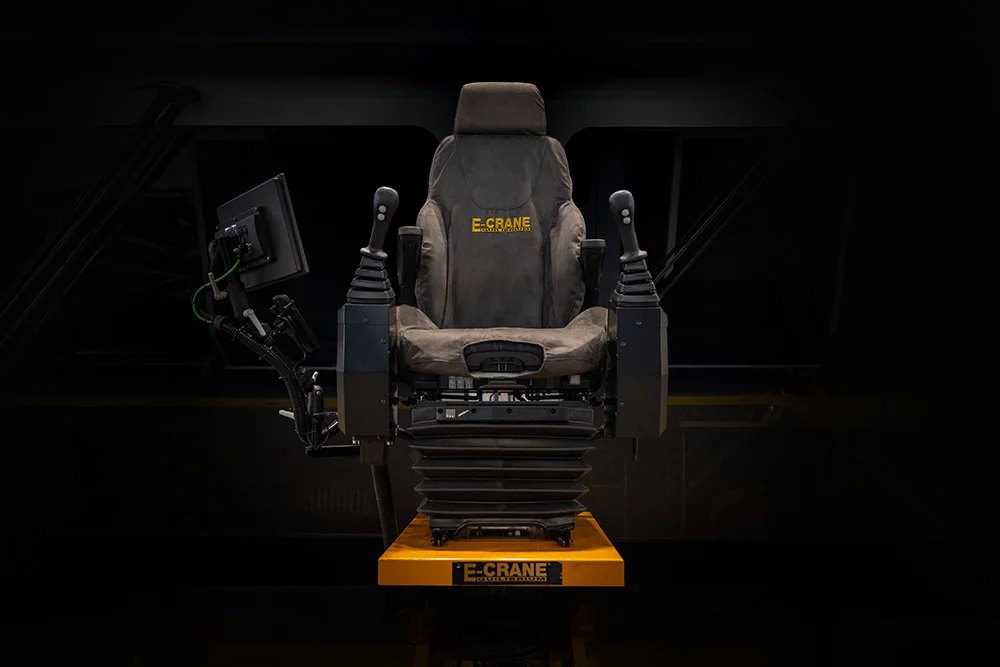
Operator comfort is a core design principle. The cab is built for long, productive shifts, with a clear focus on visibility, ergonomics and a calm working environment.
E-CARE
E-CARE: lifetime support you can rely on
E-CARE is E-Crane’s long-term service approach to keep your crane operating safely, efficiently and reliably throughout its lifecycle. It combines preventive maintenance, expert technical support, original spare parts and remote diagnostics in one structured service philosophy.

